




THE ATMOSPHERE OF THE ERA
The history and magic of the turn of the year
I. The Wiesenthau New Year's Eve Ball
A glamorous turn of the year
II. History of the New Year's Eve Balls
Traditions at the turn of the year
III. History of my New Year's Eve Balls
A personal retrospective
IV. History of Wiesenthau Castle
The historical backdrop
I. The Wiesenthau New Year's Eve Ball
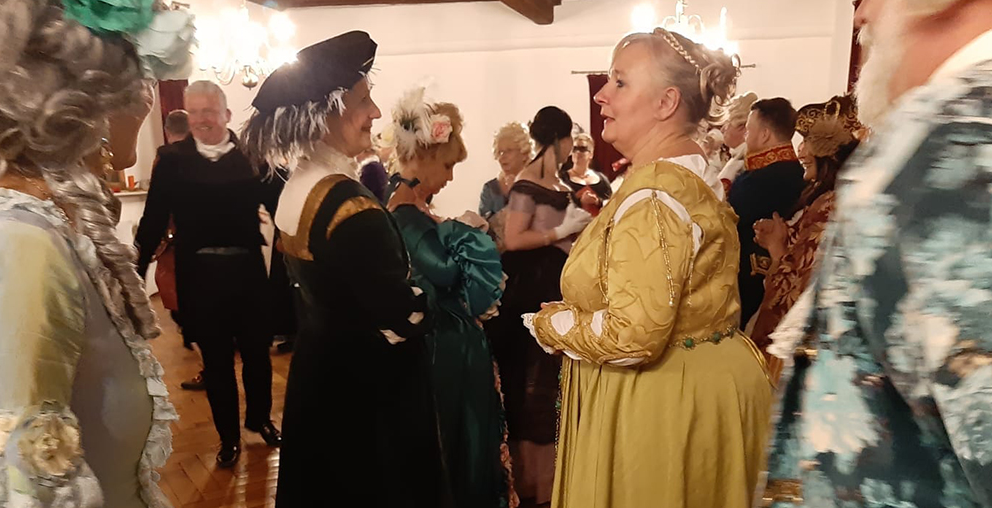
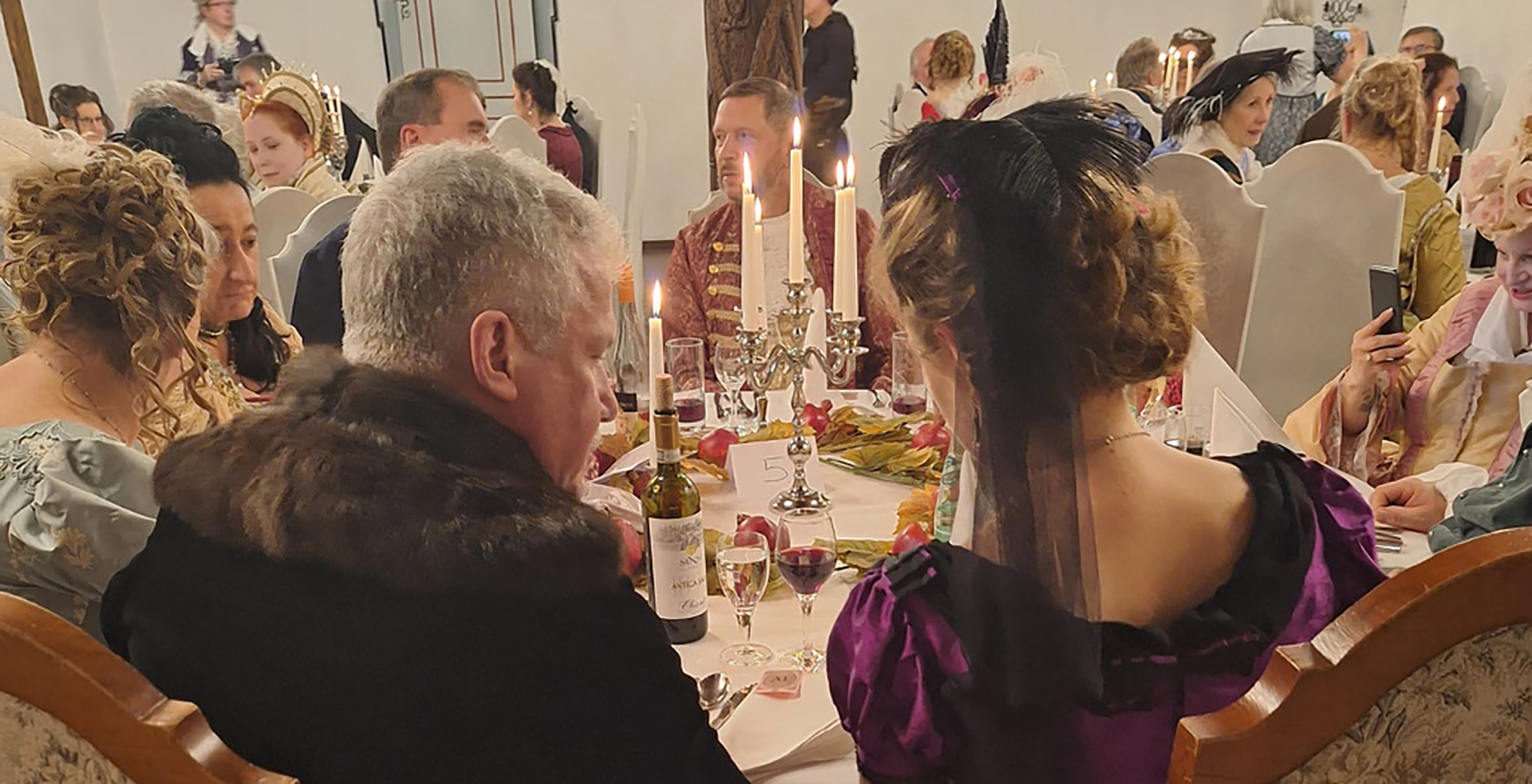
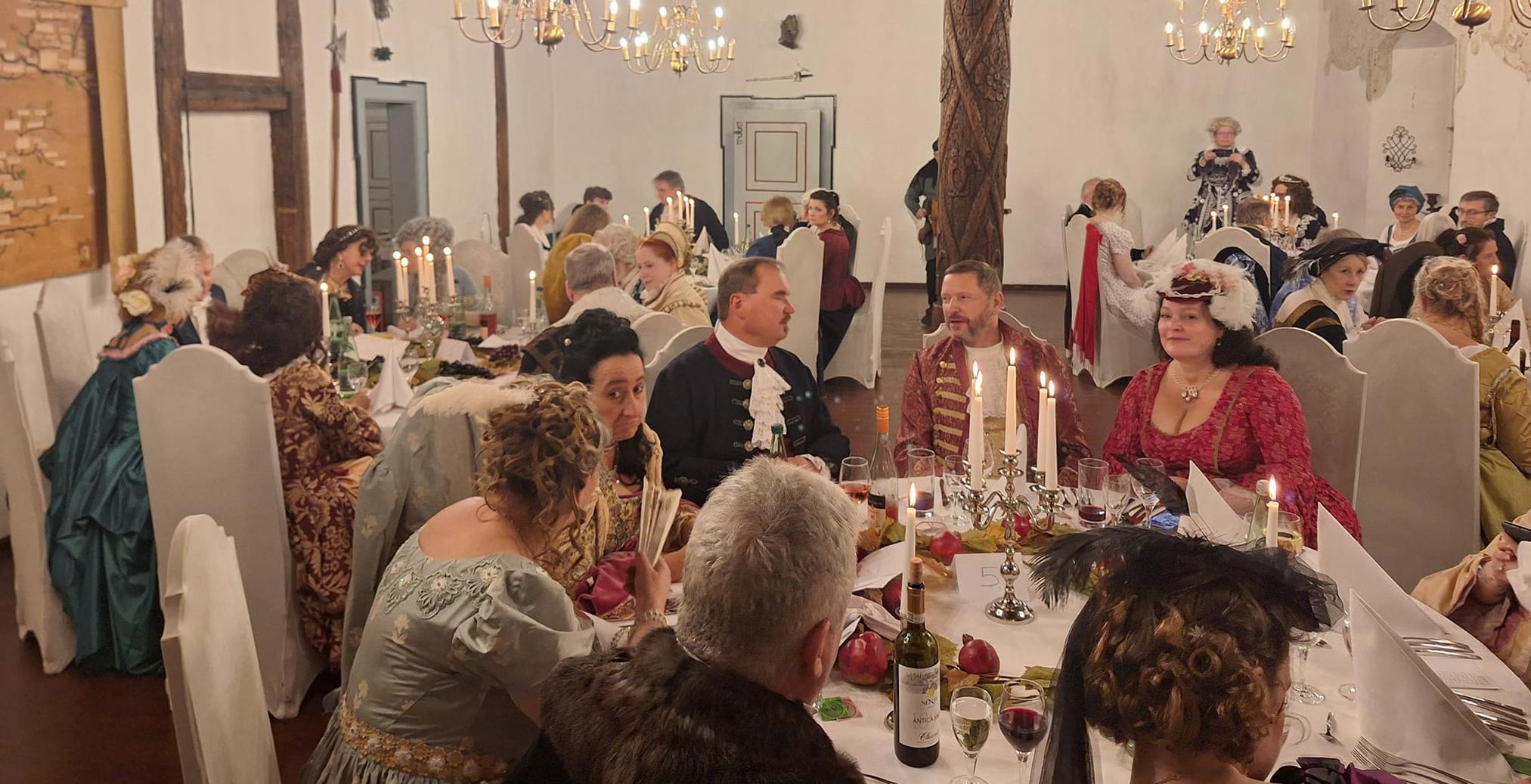
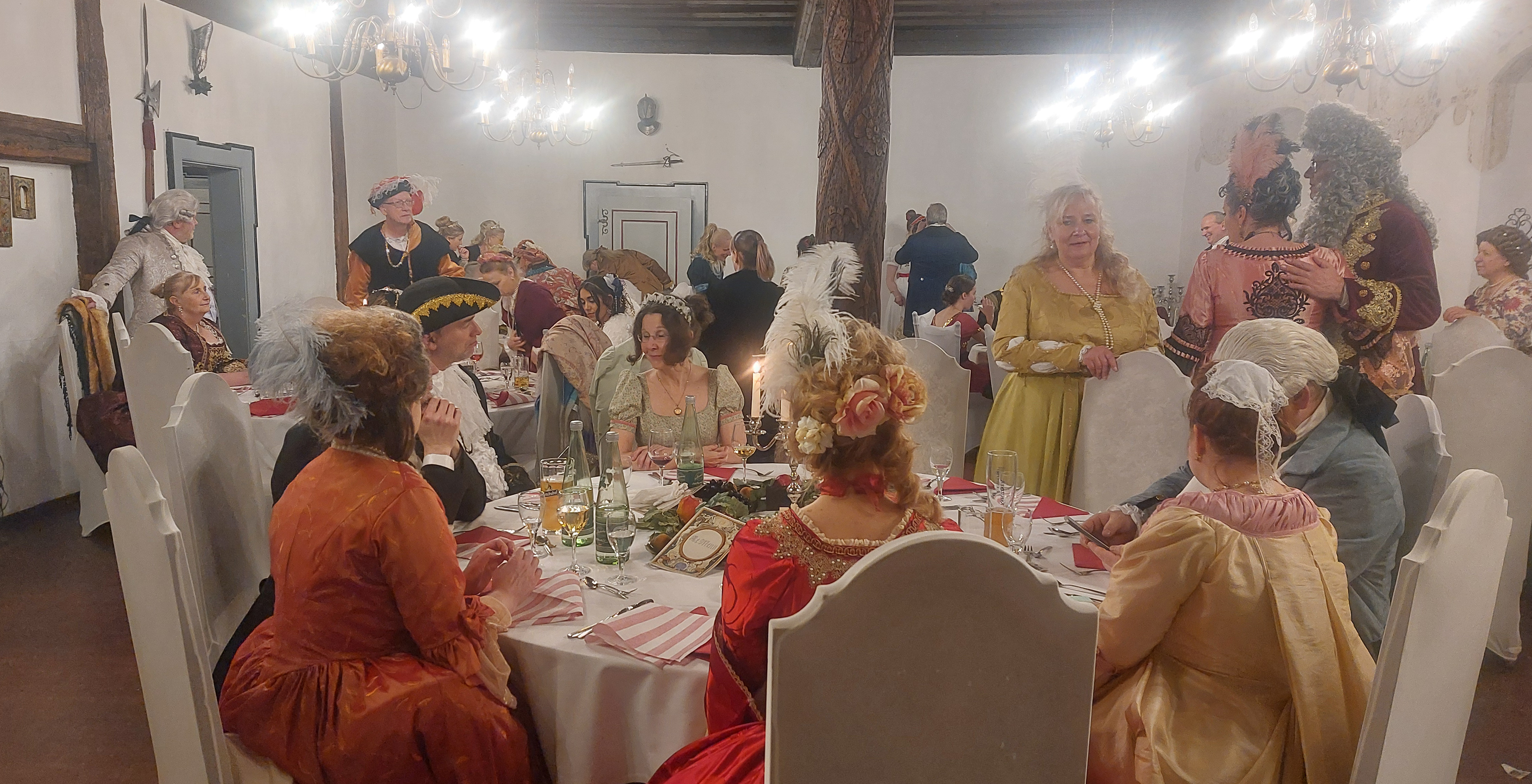
The New Year's Eve ball at Wiesenthau Castle unfolds its very own, irresistible magic – a glamorous celebration of eras that breathes the spirit of historical elegance and carefree joie de vivre. When the venerable walls shine in festive lights, the guests immerse themselves in a world full of grandeur, lively sociability, and subtle wit, which almost tangibly seems inspired by the aura of historical personalities.
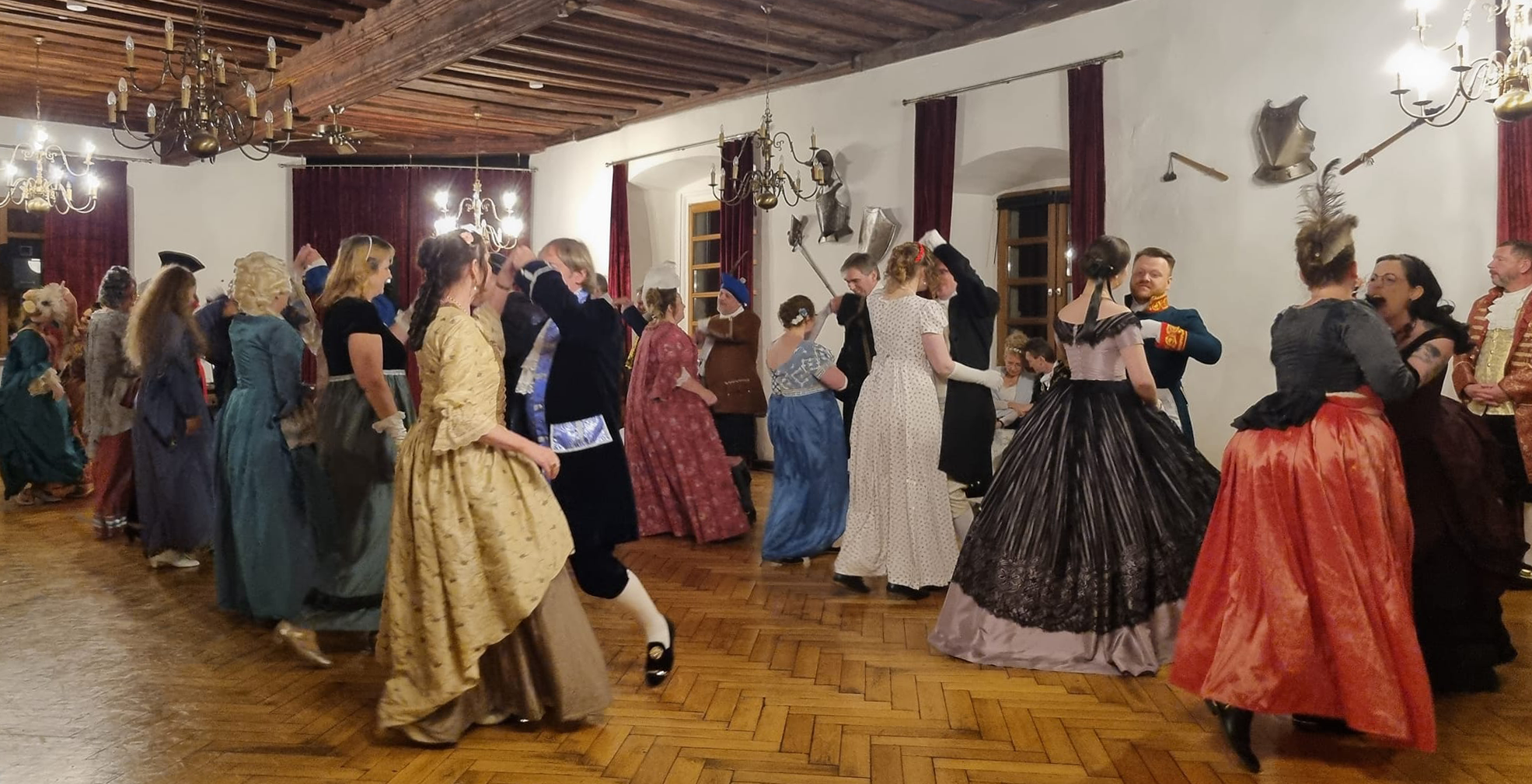
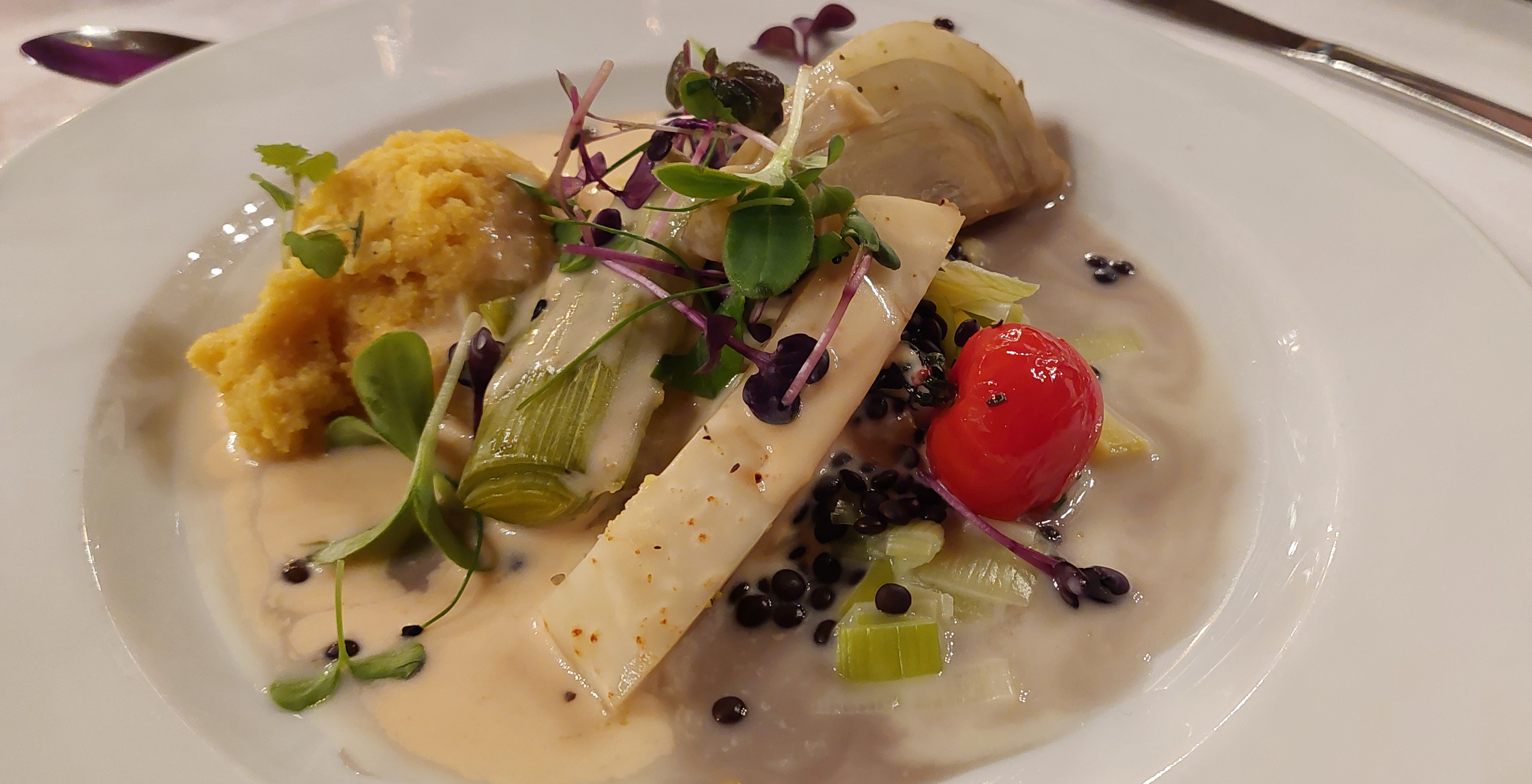
But this dazzling experience is much more than mere strolling: Together with the intensive preparation, the day turns out to be a true dance marathon, which certainly demands enthusiasm and stamina from the guests. As early as 1 PM in the afternoon, the joint preparation begins, where steps are refined and demanding choreographies are rehearsed with great joy. After a short break for a glamorous change of attire, the evening celebration truly gathers momentum. Carried by exquisite culinary delights and lively country dances, where one quickly gets into conversation with all attendees, the hours fly by. Those who wish to dance through to the furious finale at 3 AM at this wonderful festival need endurance – you truly have to keep up! In return, you are rewarded with an unforgettable night full of elegance and memories that carry far into the new year.
II. History of the New Year's Eve Balls
The magic of the turn of the year holds a fascinating history that takes us on a glamorous journey through the most magnificent eras of the past. That the beginning of a new year falls on January 1st is thanks to the calendar reforms of Julius Caesar. However, the designation of December 31st as the official end of the year was only finally sealed in 1582 by Pope Gregory XIII. He dedicated this last day to the Holy Pope Sylvester I, who died on a December 31st in the year 335 – thus giving our celebration night today its sonorous name.
Interestingly, the festivities surrounding this transition were divided into two completely different worlds for centuries. Historically, New Year's Eve itself was always a decidedly private and intimate event. Especially in the high society of the Regency era, people retreated to their private chambers on this evening. Only family and the very best friends were gathered to let the old year fade away with a fine dinner in warm candlelight. It was a time of profound conversations and personal reflection. Only at midnight was the glass raised in the closest circle, listening to the church bells and driving away the spirits of the past with cheerful noise.
It was completely different with New Year's Day, which always stood in the sign of the grand stage. As soon as the sun rose on January 1st, private comfort turned into pure social splendor. Already at the magnificent courts of the Renaissance, New Year was the day of official representation, festive receptions, and lordly etiquette. This festive tradition continued seamlessly into the dazzling Empire of the Regency period. New Year was the moment to present oneself at court, convey official New Year's greetings, and form the majestic prelude to the legendary winter and New Year's balls. Here, people showed themselves in their finest garments, glided across the parquet in rushing dances, and celebrated the new beginning with unparalleled grandeur in front of the entire society.
Over time, these two worlds merged wonderfully. The opulent elegance and the dance-loving exuberance of the official New Year's balls migrated into the mysterious night of December 31st. Thus, a historical New Year's Eve ball today combines the best of all those eras: It preserves the heartwarming intimacy of sharing the magical moment of the turn of the year with good friends, while at the same time crowning this transition with the unforgettable, royal flair of the most magnificent New Year's balls of past centuries.
III. History of my New Year's Eve Balls
Such a turn of the year full of poetry and familial noblesse also shapes the history of my own New Year's Eve balls, to which I have been inviting since 2012. The thought behind it was from the beginning as simple as it was charming: Not to simply let the old year fade away, but rather to glide into the new one immediately with the right, lively step and surrounded by like-minded people.
This lovely tradition took its beginning in the time-honored walls of Gaillenreuth Castle. In a very fine, hand-picked setting of just 25 people, we turned night into day there every year and often danced deep into the starlit morning hours. Although these celebrations deliberately differed from the large, opulent balls with live music and courtly pomp, it was precisely in this fine reduction that their incomparable magic lay. Entirely in the spirit of Fancy Vintage, they were characterized by a deep, connecting intimacy – moments of genuine encounter, where the shared passion for dance connected souls.
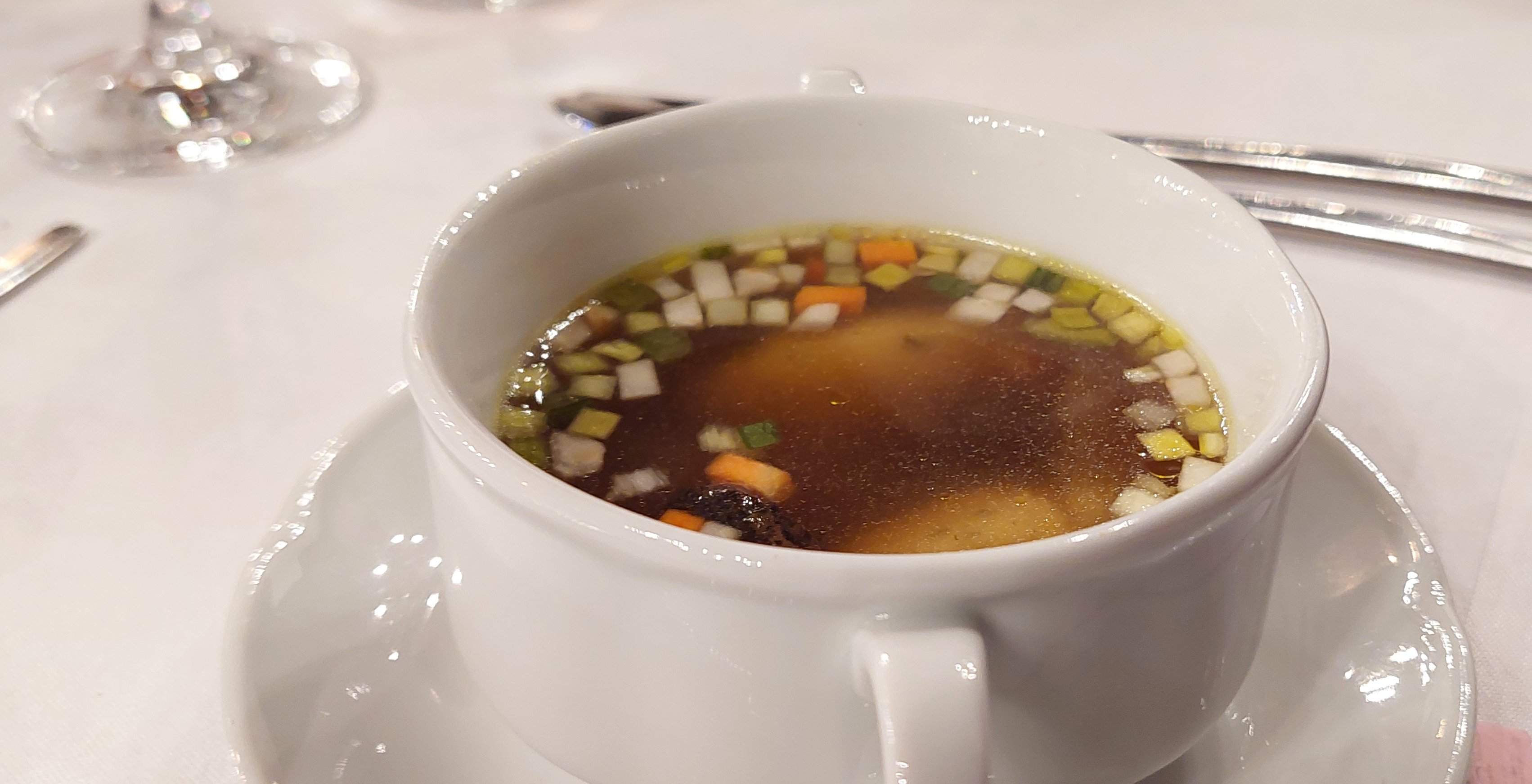
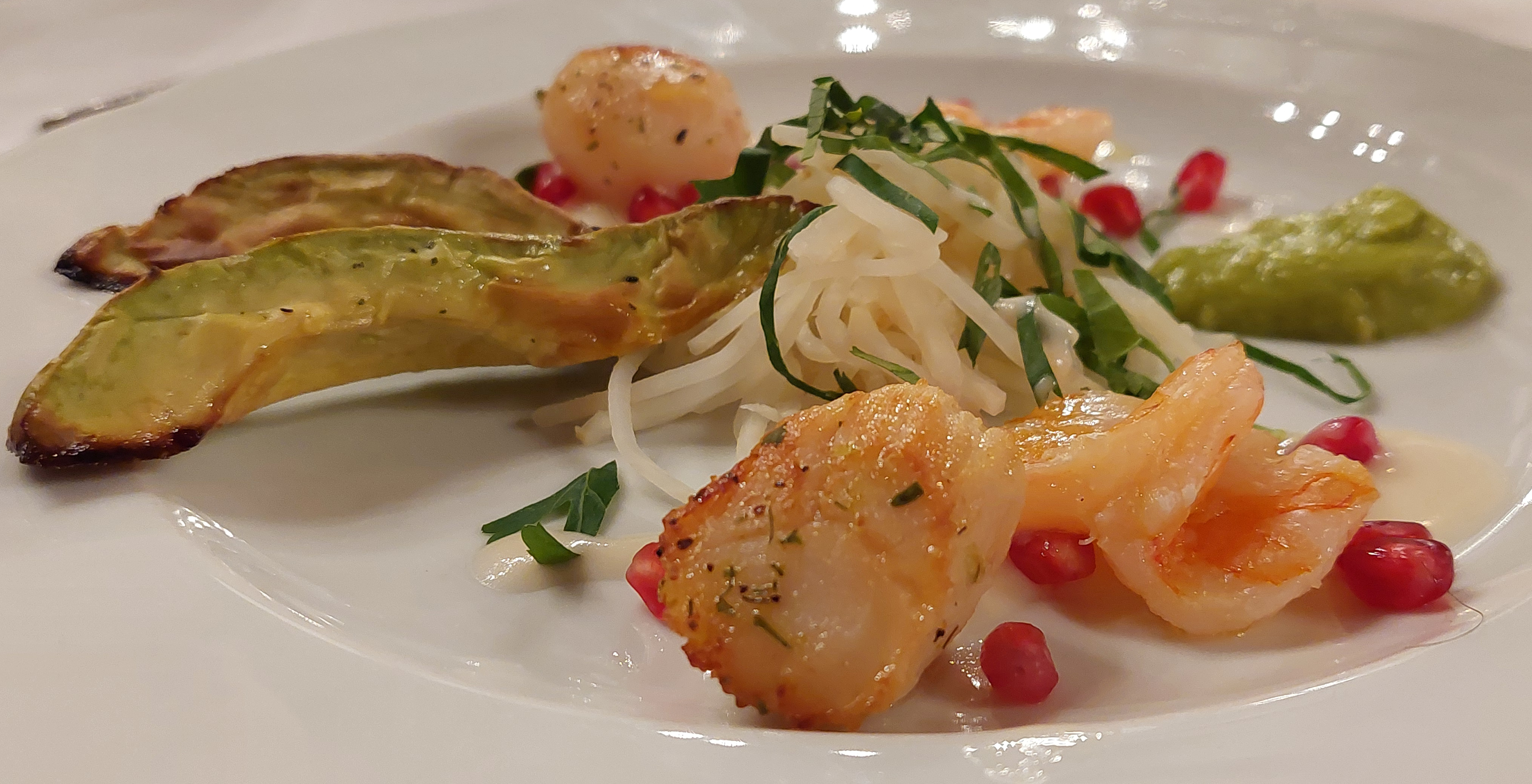
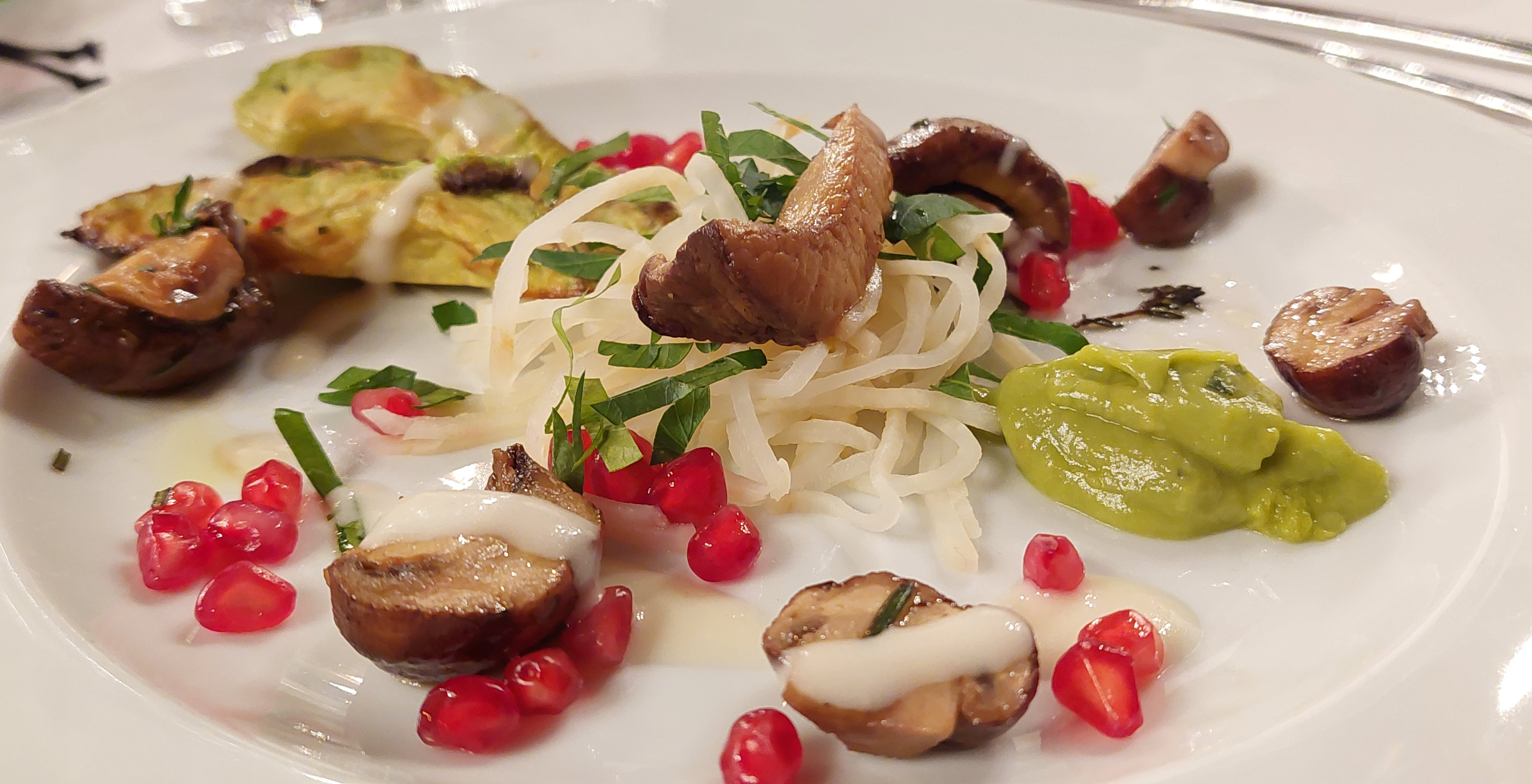
Since 2023, this cherished tradition has now found a new, magnificent home: The New Year's Eve Ball at Wiesenthau Castle. Here, the heartwarming, familiar sociability of the early years merges wonderfully with a new, enjoyable dimension. An incomparable feast now refines the transition and pampers the senses before we devote ourselves once again to the music. Thus, the original, intimate spirit of our first gatherings lives on in the glamorous halls of the castle – and crowns the start of the new year in the most beautiful and enjoyable way imaginable.
IV. History of Wiesenthau Castle
Nestled in the picturesque landscape of Franconian Switzerland, directly at the foot of the legendary table mountain Ehrenbürg, Wiesenthau Castle rises as a stone witness to a highly eventful history. Once founded in the 11th century as the proud ancestral seat of the Lords of Wiesenthau, the complex soon grew into an imposing joint-heir castle (Ganerbenburg). In order to offer a befitting home to all lines of the powerful knightly dynasty, the castle took on sheer princely dimensions. Although wars and destruction brought the fortified walls down several times, the complex rose anew like a phoenix from the ashes in the 16th century as one of the most magnificent Renaissance castles in southern Germany – a picturesque backdrop that even the universal genius Albrecht Dürer captured for eternity in his world-famous "Great Cannon" (Große Kanone).
With the dawn of the Baroque era, the former bulwark finally transformed into a place of magnificent representation and lavish courtly festivals. The wide suites of rooms and the opulent Baroque hall became the glamorous stage for a society that knew how to celebrate life to the fullest. But the wheel of time proved relentless: Wars and economic decline were followed in the 19th century by the sad extinction of the proud Wiesenthau dynasty. The architectural jewel fell into a deep slumber, from which it was only awakened to new, radiant life in the 1980s through an extremely loving, historically accurate restoration.
Today, the venerable halls breathe exactly that spirit of grandeur that once shaped them. The wonderful architectural resurrection of the castle also paved the way for a fascinating return of the fine arts: Where the historical nobility once strolled, the Schloßtanzgruppe Wiesenthau has devoted itself with the utmost dedication to the reconstruction of courtly dances since 1985. When the delicate sounds of past eras resound in these walls and the dancers glide across the parquet with mathematical precision in magnificent garments, past and present merge into a perfect unity. Thus, the circle closes, and Wiesenthau Castle shines once again as the perfect, living setting for those unforgettable encounters where we simply continue to dance history full of elegance.

